The Sustainable Leather Foundation (SLF) concluded an inspiring week of international engagement with two significant events that highlighted both the practical implementation of sustainability solutions and the importance of reshaping how the industry approaches sustainability itself.
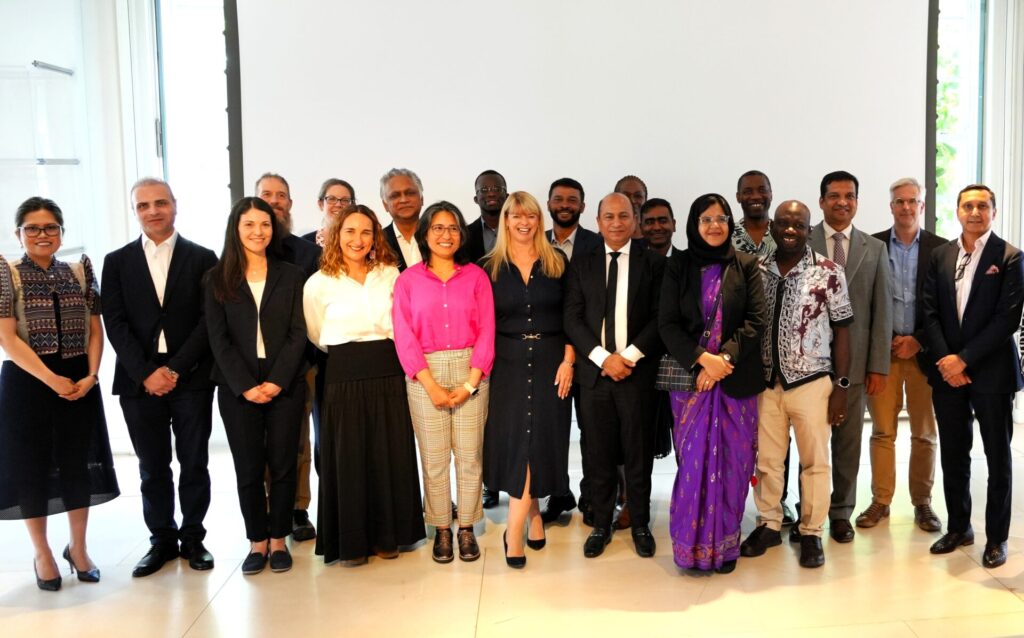
On 30th June, SLF hosted the Leathertrace Bangladesh Project Closeout Event at Mulberry’s London Headquarters in Kensington, bringing together project partners, government representatives, industry leaders and academic researchers to celebrate the achievements of the two-year Leathertrace Bangladesh project.
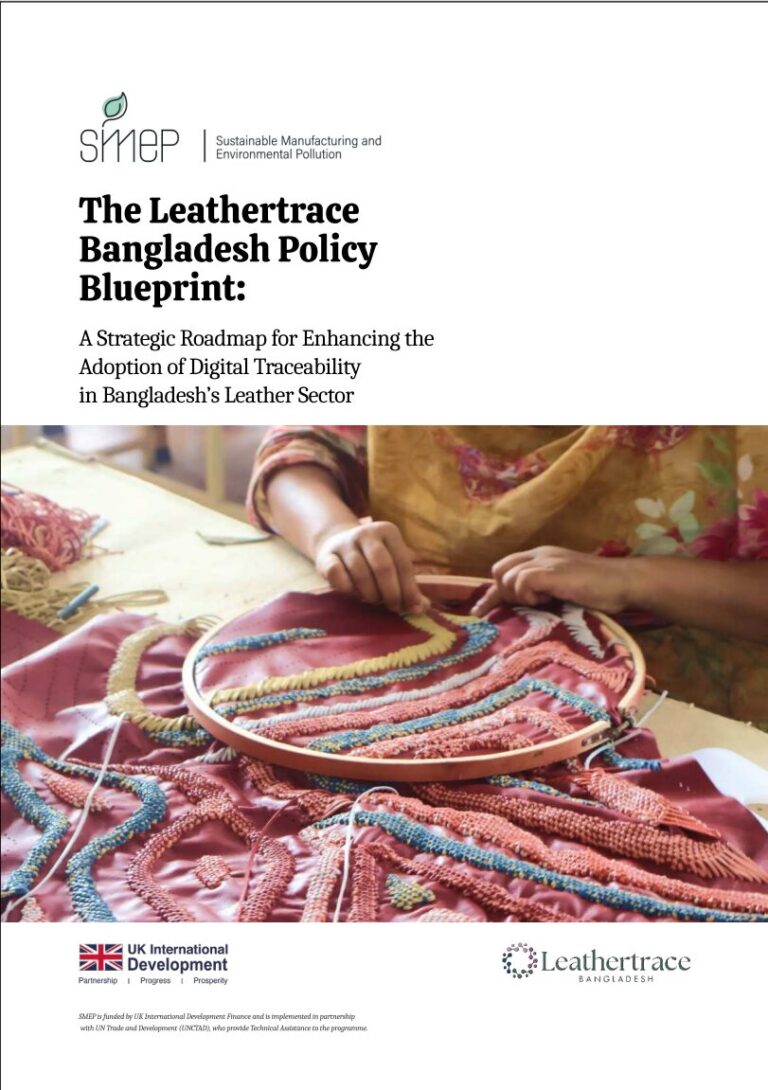
The project has delivered a number of important outputs designed to strengthen the future competitiveness of Bangladesh’s leather sector, including a digital e-traceability system, carbon calculation tools, lifecycle assessment research and a comprehensive Policy Blueprint to support the wider adoption of traceability across the industry. These outputs provide practical resources to help manufacturers improve transparency, environmental performance and international market access.
Along with moderating the programme, SLF Managing Director, Deborah Taylor, presented the project’s Policy Blueprint and closed the event by reflecting on the importance of ensuring that the project’s outcomes continue to support industry development beyond the completion of the funded programme.
The Consortium team that have worked together on this SMEP funded project comprise of University of Northampton, iDEATREE Bangladesh, SERA Bangladesh, Sustainable Leather Foundation, University of Hertfordshire and Aston University.
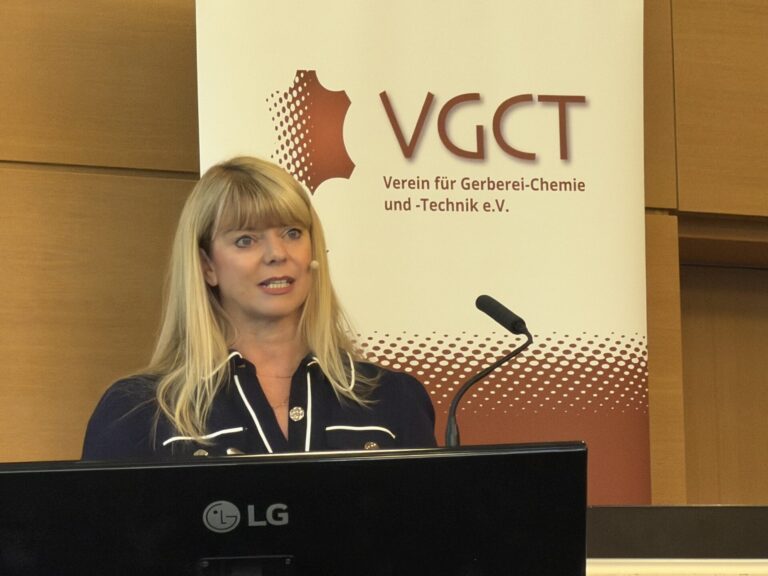
Immediately afterwards, Deborah travelled to Germany to present at the FILK Freiburg Leather Days, where delegates from across the international leather research and technology community explored the future of sustainable manufacturing.
Her presentation, “Sustainability Through a New Lens: Resetting How We View Impacts in the Leather Value Chain,” challenged the industry to move beyond treating sustainability as a collection of individual metrics and instead adopt a systems-based approach that considers context, interconnected impacts and long-term outcomes.
The presentation emphasised that while environmental metrics remain essential, better sustainability decisions require a deeper understanding of how environmental, social and economic factors interact across the entire value chain. It concluded with a call for the industry to shift from compliance-driven reporting towards innovation, collaboration and evidence-based decision-making.
Although very different in format, the two events reflected a common objective.
The Leathertrace project demonstrated how collaborative research can deliver practical tools that improve transparency and sustainability performance. The FILK conference demonstrated how those same tools become even more valuable when supported by systems thinking and a broader understanding of sustainability.
Together, they reinforce SLF’s ongoing commitment to supporting the leather industry through practical solutions, collaborative partnerships and innovative thinking that enables businesses not only to measure sustainability, but to understand it—and ultimately improve it.
“At the Sustainable Leather Foundation, we are committed not simply to helping industry demonstrate sustainability, but to helping industry understand it, improve it and lead it.”
| Cookie | Duration | Description |
|---|---|---|
| cookielawinfo-checkbox-analytics | 11 months | This cookie is set by GDPR Cookie Consent plugin. The cookie is used to store the user consent for the cookies in the category "Analytics". |
| cookielawinfo-checkbox-functional | 11 months | The cookie is set by GDPR cookie consent to record the user consent for the cookies in the category "Functional". |
| cookielawinfo-checkbox-necessary | 11 months | This cookie is set by GDPR Cookie Consent plugin. The cookies is used to store the user consent for the cookies in the category "Necessary". |
| cookielawinfo-checkbox-others | 11 months | This cookie is set by GDPR Cookie Consent plugin. The cookie is used to store the user consent for the cookies in the category "Other. |
| cookielawinfo-checkbox-performance | 11 months | This cookie is set by GDPR Cookie Consent plugin. The cookie is used to store the user consent for the cookies in the category "Performance". |
| viewed_cookie_policy | 11 months | The cookie is set by the GDPR Cookie Consent plugin and is used to store whether or not user has consented to the use of cookies. It does not store any personal data. |